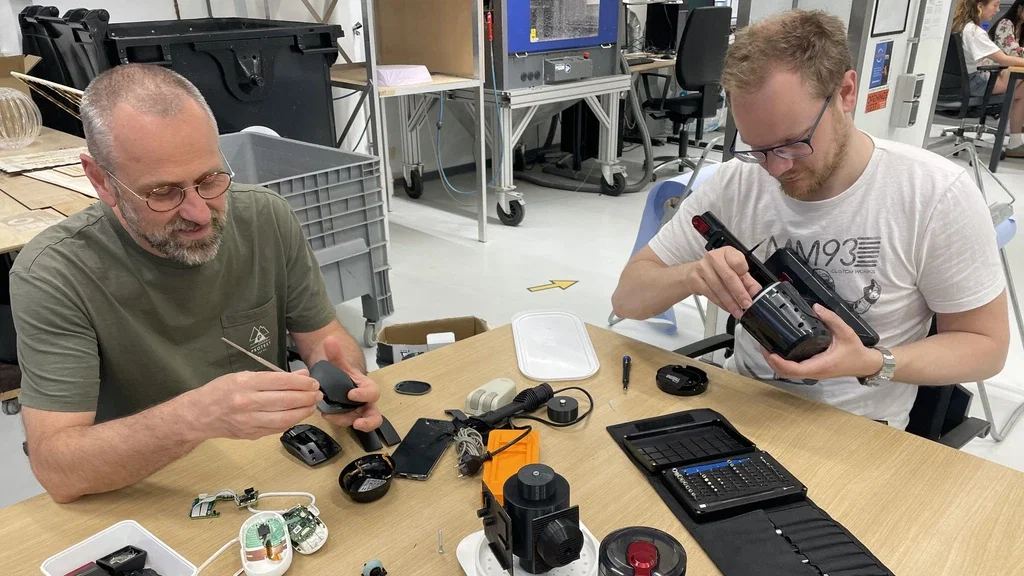
The products covered by the obligation to repair currently include:
- washing machines and washer-dryers
- dishwashers
- refrigerators
- electronic displays
- welding equipment
- servers and data storage products
- mobile phones, cordless phones and tablets
- tumble dryers
- e-bikes and e-scooters batteries (from 18 February 2027)
- local space heaters
They pass dystopian chat control with one hand and does this with the other.
The EU is a complex organization with different power poles and a variety of different interests. Add to that members of parliament do not always understand everything they vote for. And yes: you get bad things, nonsensical rules, but also good things.
Overall, I would say it’s positive, but when it’s bad it can be brutal.
Edit: I forgot to mention lobbying! Brussels is full of lobbyists!
It is also influenced by us, those who vote in the election of the European Union. The European Greens and Socialist & Democrats have lost quite a bit of influence since the last period.
Yes there are many lobbyists at Brussels and that’s a problem. Sorry for not being as cynical as you.
Seriously, talk about major whiplash with how they do things lmao
All those people in Brussels are out of touch. They live in their own world.
A world where there is right to repair.
Makes you think, right? Almost as if the narrative about how dystopian chat control is and how evil EU is doesn’t really add up and it’s just people repeating some bullshit they read on a blog.
There is a lot of anti-EU propaganda, especially surrounding the Chat Control.
Yes, there are some authoritarian politicians trying to push it through. But there is a reason why it has failed so many times. Because most EU politicians are really not that bad.
The propaganda is being pushed by Russia to sow discontent in the EU. That is why you see on every positive EU story, there is someone in the comment going “What about Chat Control though?” As if that proves the EU is evil.
As if that proves the EU is evil.
It sure as hell proves evil intent.
We’re lucky there’s a majority against chat control but that still means there was a minority proposing it.
And i don’t think the divide is that bigIt only proves evil intent of those specific politicians trying to push it through.
It doesn’t prove any evil intent from anything else in the EU.
The EU is a democracy. Which means that we sometimes also let evil people talk.
Sure, they can talk, to an extent, and act… to a much lesser extend, unless you want to go down a slippery slope.
Well when you think about it this is just another form of control over businesses. That’s equally authoritarian.
If businesses were people that’d be a great point.
Interesting things that are not on the list:
- Farming equipment
- Motor and electric vehicles
- Computers (including laptops)
- Video game consoles
- HVAC systems and equipment
Not sure if smart TVs fall under “electronic displays”, or if they just mean commercial displays when they say that.
not yet ! we hope !
John deer tractor lost a case that became famous in my rural area (and elsewhere). It now have to let repair shop acces the tools and allow repair on its tractors.
I take the win ! And we continue to push forward in talks, petitions, actions and repairs (autorised or else) Support and/or use open source.
Farming equipment is a particularly annoying one, that and construction vehicles, are becoming increasingly locked down by proprietary software and impossible to maintain yourself. You can’t even employ mechanics outside the dealer network in some instances and it will be more so in the future.
microwave ovens…
in fact, make that all kitchen appliances.
I guess maybe microwaves are not on the list because they have big meaty capacitors that could be holding a charge still?
Considering the videos on youtube about creators disassembling and modifying them and the warnings creators like styropyro and The king of random did…I don’t think they should be serviced by the regular joe. Or the dangerous parts should be sealed of from the boring stuff like the buttons (e.g. door opener) so one trained technicians can reach it but the hurdle is big enough for normies.
The idea is not repairability by the end users (those should never try to fix their microwave oven themselves) but to make repairs possible by any competent technician.
Computers are not on it because you will never own one in the future. You will lease them.
Fact 😒
yeah “farming equipment” is an important one. fuck john deere
What exactly do you think you’d be able to easily repair on a video game console?
Broken ports, replace hard drive, replace memory, no software locks so custom software can keep it alive, replace battery (on a Switch for example).
Lots of thing right to repair could do for consoles.
I would hope that the Switch falls under “Tablets”. Because that’s exactly what it is.
A fat and weirdly shaped tablet, but I agree. I can do “switch” stuff by putting on an Abxylute or a Gamesir controller on a tablet.
Video consoles are either desktop computers with proprietary parts, or tablets with proprietary parts. There is nothing especially difficult to repair in them compared to the rest of their categories.
It would be especially hard to replace the RAM and SOC in them actually.
Yes, fair.
Well how about mobile phone, laptop or a tablet?
I’m not seeing easy written anywhere, it can still be done by experts but the idea I feel would be that its overall possible to accomplish by a third party.
Consoles are just computers now.
People repair those all the time.
Yes and no. Yes in terms of architecture, no in terms of repairability and design. How many computers have a SoC with soldered RAM? How many computers don’t let you upgrade the cpu or GPU? Good luck trying to repair the GPU or cpu or ram or SSD on a modern console. It’s just not feasible. Not because they don’t want you to, but because of how intricate and specialised they are. The parts that you could repair on a console are already easily repair/replaceable.
Can’t wait to see what loopholes they will implement such that I can avoid repairing my shit and pay full price for a new one anyway because the repair costs just as much as a new one. God forbid replacing a single bearing instead of the whole wash drum, I hope the EU protects me from that like before.
You can repair it, you just need a proprietary driver, a torque wrench, 5 hands, 18 fingers, and wait 5 months for the part to arrive.
Or just take it to our shop where you can spend 250 bucks to fix your 260 dollar dryer.
I’m excited for an international business to sell a different version of the item for the EU which is “repairable”, and one for the US which is riveted and welded closed.
They won’t make it so we can install any OS we want on tablets or phones, nor make drivers published as free software, right?
We absolutely need to fight for a “software right to repair”
Unfortunately there are some exemptions. Flexible / folding displays are not covered. Fitness trackers and watches are not covered.
There is also a battery regulation coming in next year to require phone batteries to be replaceable with no tools but that has loop holes too - long life batteries aren’t covered, IP67 rated phones aren’t covered. So you can bet your boots those two reasons will be what makers use to bullshit their way out of it.
Having those rules is much better than not having them. Also, IP rating is not enough, batteries also need to have sufficient load cycles. So if it forces them to use only long life batteries that reduces the need for battery repkacements and is already something.
Well it’s a start.
Also software… I would love to have regulations that make it clear that the root of trust on all devices need to start by the owner of the device, not by the vendor… That would allow the end users to repair the software on their devices… Replacing it with whatever else they want. Next would be to provide hardware documentation to the owners to program their own devices… I don’t expect that to happen, but I can dream.
The root of trust can never be on the owner of the device for anything that requires actual security.
I disagree. For any actual security, the owner of the secrets is the only one that can be trusted. It is their secrets. Their own interest to keep them save.
Any company or government is a shifting entity, maybe now they are trustworthy, but maybe in some years they aren’t.
Owners are the only stabile point, because it is their data. They should be able to transfer the trust to a company or government to handle security, but they also need to be able to take away that trust and access, and either handle it themselves or transfer that trust to some other entity.
It is not okay for companies or government to hold the data of individuals hostage… That is not security, that is a business strategy.
If the only person that can verify the safety of your device is the owner, that device will and should be marked as insecure and not to be trusted in any instance where security matters.
Are you talking about owner safety, or some bussiness security. Yes the device is ‘insecure’ if you are taking the point of view of DRM provider or software vendor who wants to make sure advertisements are displayed, etc. Or if your software actual security depends of taking control away from the user. But actual end user security does not have to depend on that.
I’m talking about every service that you use your device for. They will not and should not trust some random phone owner that their device is secure and safe to let use their services. They will, however, trust Google saying that the device is secure and not tampered with - as they should.
Secure services should always have limited trust to user data and devices. Security built on ‘Google says the device is secure’ is broken. Yes, it is convenient fir service providers who do not care about their customer rights, but more for ‘intellectual property’ and liability.
Lots of apllications still work in web browsers without TPM-based, kernel level DRMs and many of them are still reasonably secure. They are built with the assumption user controls their device. This has always been possible and still is possible. Just inconvenient for corporations.
You are not giving a reason for your statement. The owner is the one that bought a device. The sole arbiter about what a device should do or shouldn’t do. The person responsible of the device. The owner must trust their device in order for the device to be trusted. It doesn’t matter what if other people do or do not trust that device, they are not the owners. They should take care to protect their own data on their own devices.
The reason is obvious, which is why I didn’t think I had to say it lol
Imagine if you went to work at a bank in IT for example. They issue you a laptop. You go “oh no it’s ok I’ll use my own, I assure you it’s secure and safe”.
You connect to their network and instantly their network is compromised, every device on the whole network gets a cryptolocker virus.
You said it was secure though, so how did this happen?
You can trust it all you want, but other systems absolutely do not have to, and anything that requires security assurances will not and should not trust it. The device owners word/assurance means nothing.
Imagine if you went to work at a bank in IT for example. They issue you a laptop.
Who is the owner of that device? The Bank.
Who is the owner of that network? The Bank.
So they are the arbiter of trust in that area. They are free to exclude non-bank-owned devices.
I work in IT, and I’m fine with getting a company laptop for company work. I don’t trust that laptop. I isolate it when I work at home. But the company trusts it, and that is fine.
Flexible / folding displays are not covered
So that’s why after almost a decade, only now Apple is ready to launch their foldable
Fitness trackers would be hard to make them easy repairable, when most of them is waterproof
Gaskets are a thing. Many, many, many watches would brag about their water resistance up to 10, 50, 100 meters depth. So I don’t think the excuse is credible.
Water resistance does not mean what people think. ISO 22810 says that a 3 bar (30m) water resistant is “Not suitable for showering, bathing, swimming, snorkeling, water related work, fishing, and diving.”
30m. Not. Suitable. for. showering.
Also, most really waterproof watches, 100m+, have small circular metal cases with metal backs that are screwed shut against a gasket. Some, like G-Shocks, have a proportionally thick stainless steel backplate screwed down, but the plate is what? 3 cm. Diagonal?
Doing so on a thin rectangular device with a reasonable cost is near impossible, too much flex.
Those aren’t loopholes though, they’re part of the legislation. Phone makers don’t need to “bullshit” their way out of anything if they meet the criteria, which almost every mobile phone released these days does - making the regulation pretty pointless lol
There is no repair without firmware. All hardware needs to be documented and ship with source. It hasn’t been enough to be able to buy physical parts since perhaps the 80s or 90s. Everything is controlled by software. Without that right to repair is a joke. Meanwhile the surveillance industry and their well greased govt supporters are trying to lock down software. Can’t have it both ways.

Why is bicycle on the list? A bicycle is the epitome of repairability.
Edit: it got enshittified?
Derailleur hangers come to mind, some brands use a different version in the same model lineup and model year. It’s on purpose to confuse an make it difficult for the average rider to DIY.
Also Cannondale, famous for using non-standard parts (and tools) for no apparent reason.
Ok, famous to not buy them then, thanks.
I take it you never heard Van Moof bricked bikes afteir their bankcruptcy?
Edit: and thinking about ebike motors and their parts - bosch has locked down their engines real hard
Some exceptions excluded.
That is probably a reason there are no special regulations for bicycle yet. But it is still a good idea to protect it.
It’s red because there’s nothing forcing bike manufacturers to continue down the path of repairability and outside of the enthusiast community, people might not care much, they’ll just buy what’s cheaper.
Did you ever repair a bike? Its like every model has its own special tools that you need to get Something unscrewed or pulled of. (You can buy them, though)
Although I do understand the need for some of those special tools. The thing for taking apart the chain comes to mind
Electric Bike for enshittified
Yes espresso, especially the well known ones(gaggia, rocket, rancilio). They can be repaired!
Well thing is this is not about whether the items are currently repairable, but whether laws require them to be.
At the moment there’s nothing stopping some dipshit from coming up with parts locks on espresso machines the way John Deere does them.
You’re basically describing any of the electronic style coffee machines, good luck repairing a vendor lock-in optimized keurig or nespresso machine that scans your pods to validate their IDs before brewing.
No software updates for TVs, if that includes “smart” TVs, is insane. If the panel still works in 30 years, you should still be able to update to a supported OS version for the streaming apps in 30 years. Current “smart” TVs too often get bricked (for normies) by losing update support and then support from all the streaming apps.
Phones still have replaceable batteries? I have a Google Pixel 8. How do I even open that thing let alone replace the battery?
That enforcement only came into effect recently.
You can also buy kits to lift the back of glass sandwich phones, but that isn’t the most straightforward process.
The “mobile device” one is outdated isn’t it? They added a water proofing exemption to the battery initiative which exempts any product that may be exposed to water, which exempts mobile devices, smart watches and outdoor equipment from needing removable batteries.
I would classify a non-removable battery as the antithesis of repariability as they use single use glues to hold the covers on, and also usually glue components together as well.
Unless they are saying that even with glued components its still easily repairable? but I disagree
The Delegated Act I found says the exception is for
(a) appliances, including wearable devices, specifically designed to operate primarily in an environment that is regularly subject to splashing water, water streams or water immersion, and that are intended to be washable or rinseable
So I don’t think it applies to mobile phones. Or did it get changed again?
I wasn’t aware of the last condition on it, that may have been changed since last I saw it. The last one I saw was just stating if it was exposed to water regularly such as smart watches and outdoor items. So it may be that they changed the restrictions again and I didn’t notice as well. It’s also possible I’m mixing regulations up
I did find a lot of news articles saying that (for example) iPhones are excluded, though none of them had a clear source. Maybe mine is outdated too, I guess we’ll just have to see when they announce the new models.
Water kettle stopped working, has fucking temper proof triangle head screws so can’t even open it without having to buy a special screwdriver bit. name and shame : kitchenaid
I can go one further, if you ever want to do a warrenty claim with coffeemate, regardless of how small, they require you to cut the power cord.
I bought a cheap coffeemate coffee maker, and the anti-splash valve that prevents it from brewing fell off, and I lost the o-ring that was part of it as a result.
After 3 different contact points with coffee mate as their public listed email only warranty contact was incorrect and then was bounced to a couple more emails, they agreed it was a manufacturer problem, and that it was covered, but they wanted me to cut the power cord and show proof that the unit was no longer functional, because instead of sending me a 10¢ if that o ring, they wanted me to destroy a other than that one comp a perfectly functional unit, so they could send a whole new unit in it’s place.
I bought a cheap oring set on amazon, so now I have more than I would ever need of orings but, at least it’s less wasteful.
Hold on, don’t they know a cut cord can be soldered back together? You don’t even need image generators to fake breaking it…
They don’t care if you do that, because if you do that they’re in no way responsible for it anymore. If you do that and it burns your house down it’s all on you.
yea I found it weird as well. I assume they figure most people don’t have the skills to just connect it again.
When I was looking into it, it’s common practice for kitchen appliance warranties to have that as a requirement for warranty support when they are giving a replacement, likely they are trying to disincentivize someone getting a replacement for a minor issue, and then reselling one of the two appliances they have to make a profit, which I do understand for replacements but… in my case why not just send the replacement part… it likely could even go via an envelope and only pay the price of a stamp.
Theres no way paying to send a whole coffee maker is cheaper than sending a o-ring or a washer…
One of the few good uses for AI, to generate photos or video of the device with the cord cut
Mine had Philips screws and was easy to open, but the switch that was broken proved impossible to find as a spare part. It’s a shame that I have to bin something that should’ve been easy to repair.
Most of the time it’s not about repairability it’s about mitigation of responsibility. If they make it difficult to get into and you do it anyway then burn your house down because you removed the thermistor they have a better case in court.
Malfunctioning water kettles are like one of the biggest causes of houses burning down.
Those not being repairable is a good thing. Because it would only cause more houses to burn down when everyone with a screwdriver can mess up the wiring.
That’s the thing about repairing things at home or anywhere else. You need tools to do so and more than just a screwdriver and a pair of pliers. You often special tools. You can get a set of triangle bits for maybe 4 to 5 euros and you will have them for life. So don’t be a cheap. Either fix that kettle yourself, pay someone with the skills and tools to fix it, or buy a new one. But don’t whinge about not having tools.
And let’s also be honest. Some things need to be tamper proof. Most of you ain’t smart enough and experienced enough to play with things that can injure/kill you or others, no matter how many youtube videos you watch.
A eater kettle does not have that much stuff inside that it should be tamlre proof for fuck’s sake. It can use normal screws like phillips, hex or torx.
if its an electric kettle, I have to disagree. Those have the equivalent of a stovetop going through them when in use, and have a degree of water protection required. I heavily disagree with easy to access and remove screws on those. I still think they should be consumer repairable but, I think buying a set of P screwdrivers or whatever style they choose is a more than secure enough method of protecting people who don’t realize what they are doing.
Being said, many things that do have tamper or non-standard screws I think shouldn’t like the iphones, but I think appliances that have a burner element or a higher power draw should remain one of them.
Phones absolutely should have screws like they have though, as flathead and philips head, especially at that size, are way too prone to burring.
They’re not even really “non standard” screws at this point. Anyone can buy a screwdriver set for a few bucks to disassemble an iPhone.
Yeah but if you’re opening high power stuff while it’s plugged in thats on you. I get tamper protection on power supplies and stuff where you could get shocked by a capacitor. But a big heater not plugged in is harmless
Even if it’s unplugged first, I strongly disagree with the insinuation that since it’s unplugged it’s harmless. This is a device that uses the same amount of power draw as a stove top and has water contact as part of it’s daily use. If someone who doesn’t know what they’re doing decides they want to access it, and does it incorrectly, it has the capability of burning your house down.
Having a standard screw on it like a Phillips or a regular screwdriver significantly lowers the barrier of entry in allowing someone who doesn’t know what they’re doing to work on the equipment, which is why I think it’s fair that a component that has that capability has a something like a hex or a p bit. Those are both something that are not hard to obtain, but also something that you likely won’t find just randomly laying around in your house unless you already regularly work on devices or equipment.
Sorry but as long as it’s unplugged it’s literally just a bunch of wire. Wire by itself even a heating coil has no way of burning your house down while unplugged.
I think you may have misread or misinterpreted the comment. Probably my fault for not making it clear, the “harmless” nature is removed when its plugged back in again, not during the repair. It’s a different point of the repair process.
Maybe electric kettles are different where you live, but they are extremely dangerous because of the amount of power needed to heat water to 100degreesC quickly. Iirc some countries don’t even have them because their house can’t provide enough power.
But unless you understand the electrical components and the rules and codes in their use for consumer safety, maybe, just maybe, it should be a little bit difficult to gain access to if your 10 years old.
Go buy some bloody tools and quit your whinging.
Yeah sure I’m gonna buy stupid triangle screwdrivers so my nonexistent 10yo cannot open the heater.
If the said 10yo knows where the tools are it does not matter what kind of screws there are. It just makes me have to buy stupid tools I will only ever use for one appliance.
If it bothers you, buy a thread gauge and replace the triangle head with something you like better.
I dont have such a kettle the issue is when you buy the tools to rekove the screws it males no sense to bother changing the screws anymore
Yeah, it’s more of a personal preference thing.
I would recommend against doing that to begin with since plug in kitchen appliances especially need to respond in a safe way to shorts and even the basic barrier to entry that some weird screw presents is enough to make a person who might inadvertently kill themselves or someone else slow their roll.
But you can for a very low price acquire the tools to allow you to open many objects.

Heh, the dryer stopped working at home and my spouse was bracing to buy a new one. So nice to break out the multimeter, find the issue, and 10 dollar part later, good as new.
Think of all the waste avoided by repairing a tiny part in a gigantic appliance.
Today I repaired my toothbrush after my room mate suggested buying another one that is cheaper than mine amd the same brand as theirs.
Looked up the model, iFixIt manual available, opened it, tightened the screw on the vibrating head for the motor and put it back together.
Working flawlessly again and 50-75€ (or even more) saved.Yeah this could be great. Part of my job involves clearing up fly tip, dumped rubbish, and a shit load of it is electric appliances. Most people don’t know how to use a multimeter, but you only need to know someone who does.
I wonder if this will mean screwed split-half washing machine drums, for example.
One of the most common failure points in washing machines is the drum bearing. Nowadays almost all makes are using drums where the halves of the drum are plastic, welded together, where they used to be screwed together. The welds prevent opening the drum, and make bearing replacement basically impossible. The makes will sell you a replacement of the whole assembly, but it will often cost like 2/3 of a new machine. This means that a bearing failure often results in chucking a machine that used to be repaired for a cost under a 100 € if done professionally, or tens if DIY.
I imagine the “whole assembly” concept will be used as one of the loopholes.
That specifically is such a naked example of planned obolescence i’m still salty that was not already illegal.
I was fuming when the bearing on my Bosh washing machine wore out and without batting an eyelid they wanted to sell me the whole drum assembly. Including mounting springs. Instead of just some bearings.
For the unitiated, that is roughly 70 percent of all the components in the whole machine. Other than the drum assembly there’s basicly only some logic boards, some plumbing and the motor.
All that to replace a 20 euro bearing. Which is a “wear part” by the way and should therefore 100 percent be serviceable.
My sister remodeled her kitchen about 10nyrs ago. All appliances Bosch. Microwave, fridge and oven have all had problems.
Bosch is not what it used to be. If you can afford it, Miele. Bulletproof, very well engineered and repairable.
Expensive, but worth it in the long run.
I had an all Miele kitchen, except for the microwave. 0 problems in over 15 yrs.
Miele machines are in the four digit numbers though and are, in my opinion, only really a good option if you’re in the market for higher end appliances.
I’ve instead just stopped buying into the whole idea of “quality” appliances and now just go for the cheapest that offers the featureset i’m looking for, which is usually extremely basic, off of the assumption that i’m going to need to write it off as soon at is starts failing in 5 or so years.
I appreciate miele employ higher quality componentry but I’m of the conviction reprability shouldn’t be a budget matter. You can go through a lot of cheap laundry machines for the price of one miele.
It will suprise noone a 250 euro washing machine uses cheaper components that break faster but they should also be cheap to fix, there really is no reason they can’t be.
The savings bosh make on some screws by gluing or plastic welding the drum housing shut is not in a reasonable relation to the reduction of reprability of the machine and the load of premature writeoff has on the environment.
For things like these I love Europe. For things like Chat Control I hate Europe
I’m noticing cars are not part of the list, despite being smartphones on wheels
Presumably the germans must have lobbied tooth and nails against this.
Hopefully, malicious compliance loopholes will be fixed eventually
When the EU mandated USB-C, Apple included a bullshit adapter so they could keep their proprietary charger. But of course if someone with an iPhone was visiting my house they wouldn’t have an adapter with them. Eventually the EU bitch-slapped Apple over that nonsense and now iPhones have USB-C for charging.
So, companies will definitely try to weasel out of serving consumers, and the EU will eventually sort them out.
regulation works.