
I expect the wish would kill him too, and most of MAGA. They all want to take over Greenland.
rainwall
- 0 Posts
- 13 Comments
Joined 6 months ago
Cake day: July 17th, 2025
You are not logged in. If you use a Fediverse account that is able to follow users, you can follow this user.
 1·2 days ago
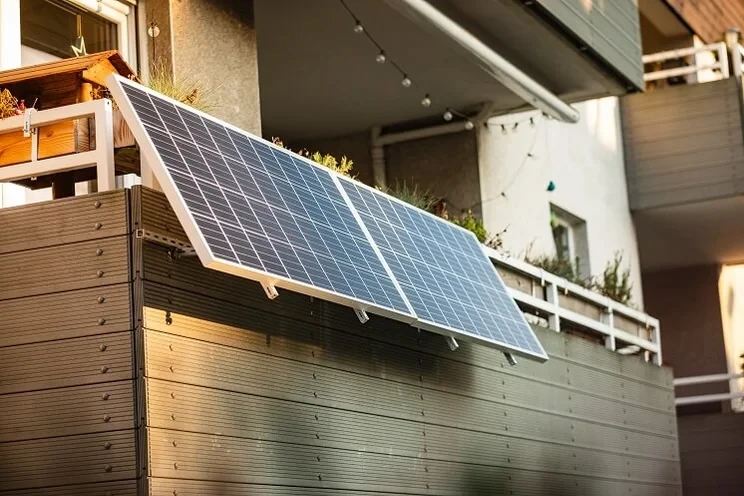
Im more talking about german style plugin balcony solar. The panels are normally hung off the side of the balcony and plugged into an outlet directly:
Im 100% with you on rooftop solar.
You gain plenty of postivies with that expense. Individual energy independence, system resilency, price stabalization, on and on. Lifespan of solar panels is 30+ years, and payback is often in the 4-7 year range. The numbers work out in your favor for a long time.
But okay, leaving out rooftop solar, and just going grid scale. With the renewable mix your city has now, and assuimg your intial power usage numbers are correct, you need 30% of the 150km to have the city running on 100% renewables. Thats 45 kilometers of nearby land. Seems way more doable than 150km, especially if its 10km here, 15km there, etc. Using a mix of agrivoltaics (farm + panels) and distressed land (old mining/industrial/military/etc) should make that even more viable.
Whats the total surface area of Veinna rooftops? Square footage of balconys in the city? How nearby is 150km of rural land? How windy is the surronding area?
Im betting you can get 30% there with a mix of rooftop and balcony solar. The rest of the renewable influx can be from local wind or large scale solar farms. Worst case, you build long distance, low loss DC power transmission lines to interconnext to another clean grid within 1000 miles.
Clean power is best when its very local, but it doesnt have to be. As an example, Washington state exports hydroelectric power a 1000 miles to Los angeles, California. It can be done.
EDIT:
Looking into Viennas current power, it looks to get around 60% from hydro, 6% from wind, and currently 6% from solar. Yall are at 72% renewable right now. Some random info docs also put Vienna greenspace at 40% of the city, so that means you have 240km of some kind of private or public building. Knock off 100km for errors sake, and yall may even have roughly 150km of solar area availible, right now.
If you use just 18% of it for solar roofs/balconies, you will get to 90+% renewable. At that point smile and have a glass of local wine from one of your city vineyards. You did it.
He also got his pension for life after being hired back for 1 month and retiring medically for “PTSD.”
Murdering Daniel was so tramatic he requested they give him back the murder weapon, his personal AR-15 with “youre fucked” engraved under the safety.

 12·4 days ago
This isnt accurate. They just disabled the @grok action for free users. The Verge tested it and free users can still generate CSAM in several ways in the app.
 41·6 days ago
US still just averages 65 kilometers per day.
Please, dont ever read Stephen kings IT.
Its…deeply fucked up. It includes a child group sex act that happens right before they confront IT directly, which empowers them to defeat it.
Like most his books back then, the byline should have said “Cocaine, with Stephen king.”
99 dotcom bust, 911, 2008 great recession, covid, idiot tarriffs and this ai bullshit, all while in the worforce.
Yeah, the older millenials be eatin lean cause they always been eating lean.
The above prices arent something you will see in a bike shop. Entry level bikes from large brands run around $800-1200 or so in my area. The common price for “good” bikes at my local shop range from 2-6k. Add 1-2k for electric versions.
$150 for a bike is walmart pricing. These are commonly called “BSOs” in cycling circles, i.e “bike shaped objects.” The components, from the frame to brakes to wheels/etc are all either no name or wildly shoddy, and arent assembled by bike mechanics, so they often aren’t put together correctly. They generally aren’t recommend for safeties sake.
Dentist’s notoriously ride 12k carbon bicycles, to the point thats its a meme. The type of bike that bike ships put in the display window to get most people to come in and buy the common 2k ones.
The running joke in biking circles is that when you see someone in full lycra on a very high end bike, its a dentist fresh from the tooth mines.
 1·2 months ago
They are on it:
Home Assistant Connect ZBT-2 supports Zigbee 3.0 (and yes, we’re looking at Zigbee 4.0 support as well) and is keeping pace with Thread’s rapid development.
Its always okay to protect your mental health, even if the person causing you pain is happy about the outcome.