VetOfTheSeas@discuss.online to Work Reform@lemmy.world · 1 month agoIt's riggeddiscuss.onlineimagemessage-square145linkfedilinkarrow-up11.16Karrow-down118
arrow-up11.14Karrow-down1imageIt's riggeddiscuss.onlineVetOfTheSeas@discuss.online to Work Reform@lemmy.world · 1 month agomessage-square145linkfedilink
minus-squarefizzle@quokk.aulinkfedilinkEnglisharrow-up9·1 month agoAre the benefits you might receive dependent on how much you contribute? This seems very “American”. As in, superior American-style-freedom because everyone pays for their own social security.
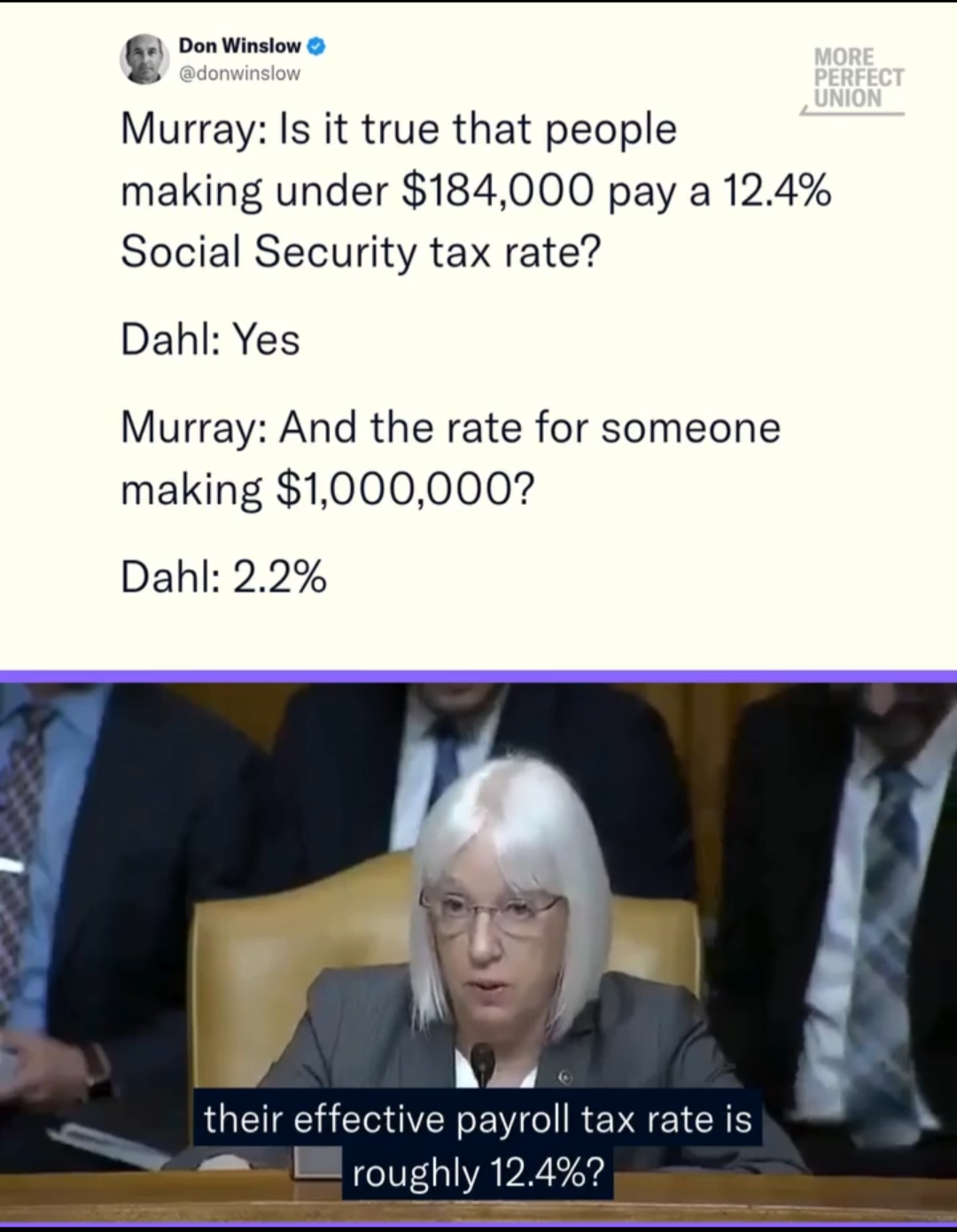
minus-squareLastYearsIrritant@sopuli.xyzlinkfedilinkEnglisharrow-up10arrow-down1·1 month agoSocial security has a max payout, so it also has a cap on the taxes you pay into it. At a surface level, it makes sense, which is why it continues. Once you look into it even a little bit further, the max payout needs to stay, but the tax cap needs to be removed.
minus-squareFlexibleToast@lemmy.worldlinkfedilinkEnglisharrow-up8·1 month agoI’m pretty sure they are. The more you pay into the system, the more you get at retirement age. But, it’s also capped. I’m assuming that’s the rationale behind capping the tax.


Are the benefits you might receive dependent on how much you contribute?
This seems very “American”. As in, superior American-style-freedom because everyone pays for their own social security.
Social security has a max payout, so it also has a cap on the taxes you pay into it.
At a surface level, it makes sense, which is why it continues.
Once you look into it even a little bit further, the max payout needs to stay, but the tax cap needs to be removed.
I’m pretty sure they are. The more you pay into the system, the more you get at retirement age. But, it’s also capped. I’m assuming that’s the rationale behind capping the tax.