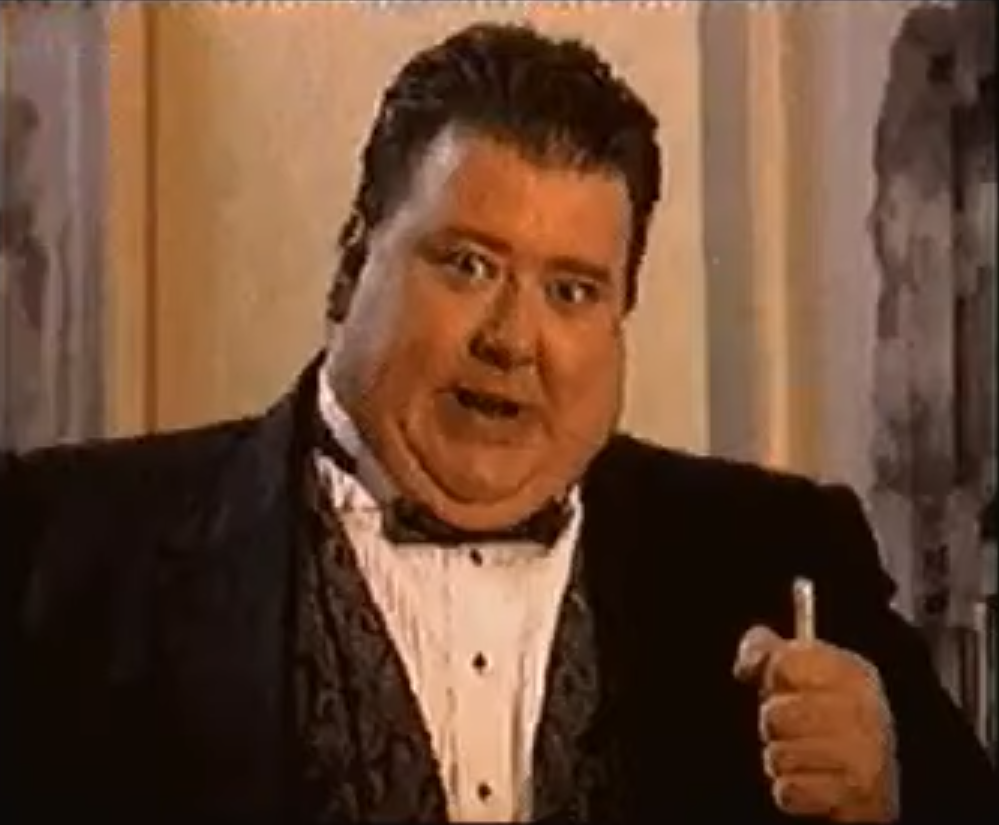
That’s not what this double negation cancels to, though. The cancellation of “I can’t believe it’s not butter” is “I must/I’m compelled to believe it is butter”. This is because you’re saying you lack the power to believe that it is ~B, where B is the set of butter. Thus, because you’re addressing that it exists (i.e. you have to believe it’s something), you not only believe it is in set B but are powerless to do otherwise. ∎
See also: /r/isitbutter
Yes, everyone’s.
Images of pure text aren't accessible or necessary: use proper text, instead.
Images of text break much that text alternatives do not. Losses due to image of text lacking alternative:
- usability
- we can’t quote the text without pointless bullshit like retyping it or OCR
- text search is unavailable
- the system can’t
- reflow text to varied screen sizes
- vary presentation (size, contrast)
- vary modality (audio, braille)
- accessibility
- lacks semantic structure (tags for titles, heading levels, sections, paragraphs, lists, emphasis, code, links, accessibility features, etc)
- some users can’t read the image due to lack of alt text (markdown image description)
- users can’t adapt the text for dyslexia or vision impairments
- systems can’t read the text to them or send it to braille devices
- searchability: the “text” isn’t indexable by search engine in a meaningful way
- fault tolerance: no text fallback if
- image breaks
- image host is geoblocked due to insane regulations.
Contrary to age & humble appearance, text is an advanced technology that provides all these capabilities absent from images.
It could work with accessibility captions and transcripts.
I’ve done that when posting on [email protected]
- usability
I can’t not believe I can’t believe it’s not butter, but when I do, I believe it.
but i’m not always so sure…they should call it I Could Believe It Might Be Butter
And then there’s English’s double negative which results in single negative somehow
“I ain’t doing nothing” means “I am not doing anything”