

History Major. Cripple. Vaguely Left-Wing. In pain and constantly irritable.

  • 212 Posts
  • 711 Comments
Joined 1 year ago
cake
Cake day: March 24th, 2025

help-circle
  • Those look very similar to me. I would say Japan is now where Poland will be in 10 years. Why it’s a problem for Japan but not Poland?

    That’s the thing about population pyramids - they don’t just move up evenly. They’re adjusted by the ongoing mortality of each age group and the size of the next age group down. Poland and Japan are on the same trajectory, but Japan is, effectively, much further along. More ~30-40 years than ~10. The emphasis is less on the largest ‘boom’ generation, and much more on the general trend of the ‘youngest’ generations shrinking, growing, or being stable. In Poland, it’s uneven - closer to shrinking than stable, but more stable than Japan, which is only shrinking.

    Even relatively small differences can have an outsized effect in making the older generations an ever-larger proportion of the population despite their lifetime mortality going up with each age bracket. Compare the percentages here. “Boom” generation aside, Japan’s retiree cohort is roughly 150% the youth cohort. That’s not a good sign. For Poland to end up with those numbers in a decade, it would have to have effectively no mortality in the elder cohorts - extremely unlikely.

    That being said, it is a problem for Poland going forward - as well as many other developed countries.


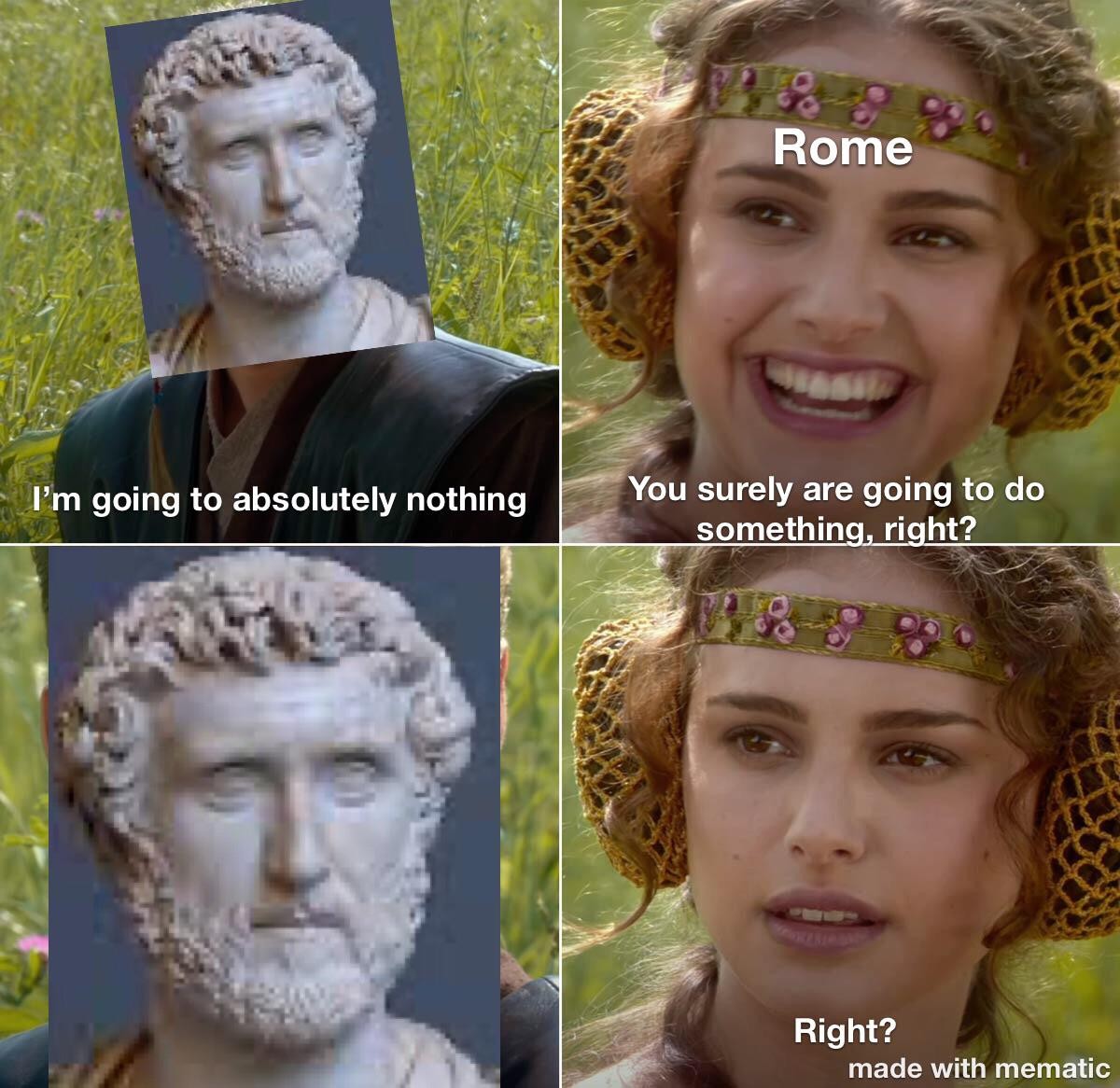
  • Explanation: Antoninus Pius is one of the longer-reigning Emperors of the Roman Empire. Why does no one remember him? Because he did nothing.

    Not literally nothing, but his reign contained little in the way of excitement. No great invasions or defenses, no fundamental reforms in yet another misguided attempt at adulation or military glory, no crisis that was allowed to blossom to such a stage. Just a quiet, diligent man who was noted to enjoy fishing in his down time, keeping a steady hand on the tiller of state. When his ~23 year reign was over, letting the gears of government turn with nothing more than addressing problems and clarifying legal issues as they arose, the Empire looked much as it had when he had inherited it - just with a bit more of everything - charitable organizations, completed infrastructure projects, legal protections, slave rights (but still slavery, because the past is a shitty place), money in the treasury…

    Antoninus Pius did nothing, actively. By inaction, he chose the best possible course of action in his reign. o7

    Wu wei is a Taoist concept Romans were unlikely to have been aware of.


  • I know this is the shitposting Lemmy and historical accuracy isn’t the goal here … But you don’t honestly think they put plantations in infertile places and used slaves for no reason right? They made a shit ton of money

    Overall, you’re right, but I’d like to point out two caveats here:

    1. Southern plantation farming was incredibly inefficient and utterly ruined the land it was practiced on - something that was recognized (and criticized) as early as George Washington. So they did build their plantations in fertile areas, but exhausted the soil and did very little to let it recover until George Washington Carver (unrelated) started spreading crop rotations around ~1900.

    2. The aristocrats made a shitton of money relative to the average person, but they were much, much poorer - both individually and as a society - than the industrialized North. Northern farming, even, was much more efficient - but the Southern aristocracy perpetuated their system because control was more important than money. In the slavery (and sharecropping) system, the plantation class effectively ruled little fiefs of dependent ‘free’ farmers and unfree (legally or practically) Black labor, able to exercise wide-reaching control not just economically, but also socially, culturally, and politically. Given the choice between more luxury or more power, they chose more power, and used that power to perpetuate their sickened systems.


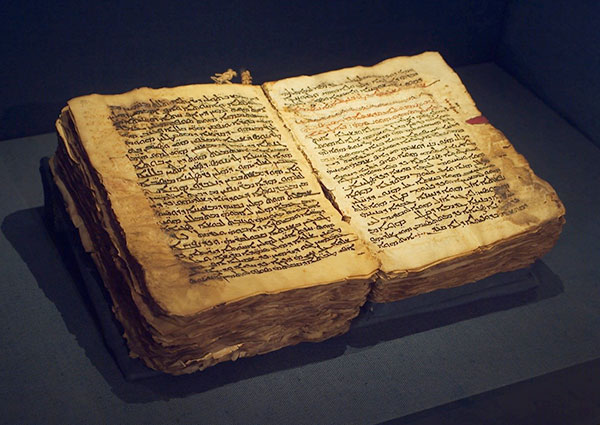
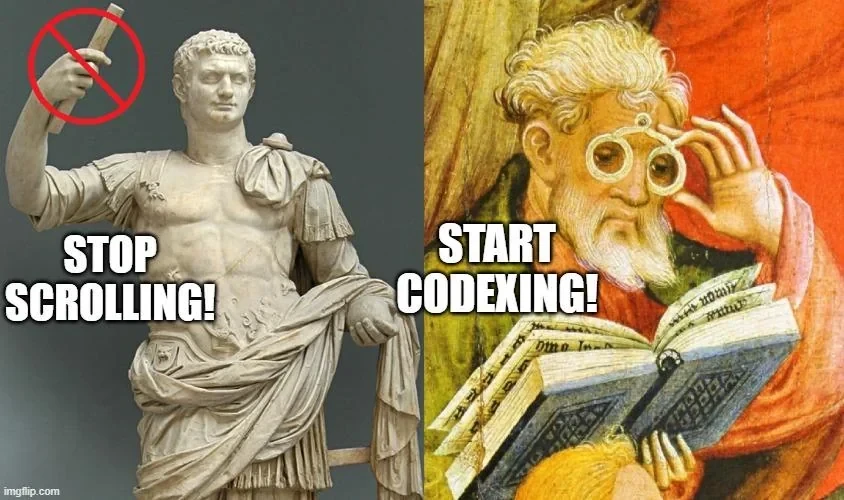
  • Explanation: What we were generally recognize as the physical form of a book in the modern day is formally called a codex - an invention of the 1st century AD Roman Empire that made reading and book storage much more efficient. Instead of a single sheet of paper that needed to be unraveled, smaller sheets were bound to a spine and protected with covers, progressing through the writing by turning the pages.

    Stop living in the past! Embrace the F U T U R E!